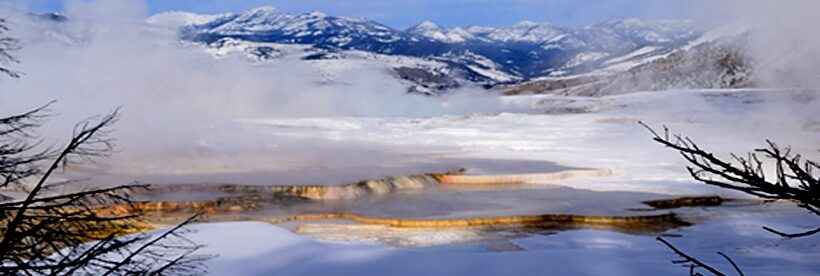
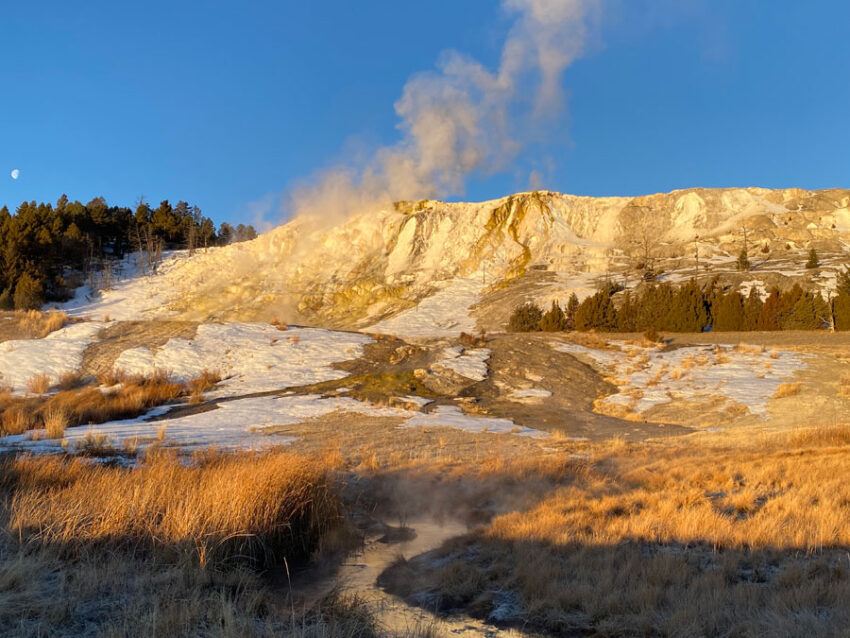
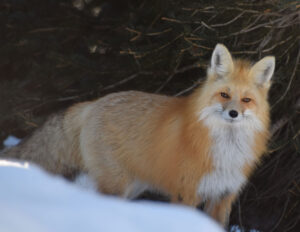
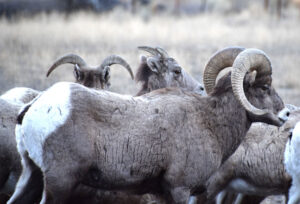
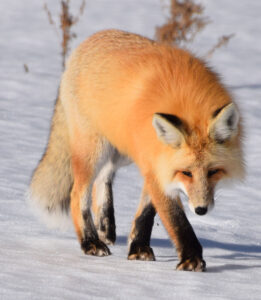
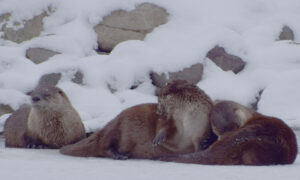
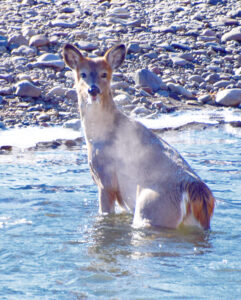
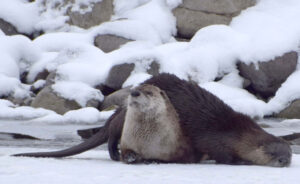
This is a winter of limited snowpack for Yellowstone Park’s northern tier landscapes. We will certainly come to rue this lack of usual winter weather next summer, but it’s made travel from the park’s north entrance near Gardiner, Montana, to Cooke City, Montana, easy to do. Consequently, I’ve been able to readily explore Mammoth’s hot spring systems and to watch park animals in their winter habitats. The following photos of both hot springs and animals are from my various park visits this winter.
Northern Tier Thermal Features
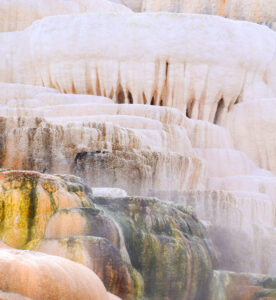
The Mammoth Hot Springs complex has been active for several thousand years. Fouke and Murphy (2016) note that travertine deposition began about 7,700 years ago (based on a radioisotopic age derived from travertine underlying Mammoth and sitting atop 2 million year-old Huckleberry Ridge volcanic rocks) and continues to the current time. And – there are older, fossil travertine deposits in and near the town of Gardiner (about 6 miles northeast of the Mammoth Hot Springs area) that have radioisotopic ages of circa 19,500-38,700 years (see Geopostings.com: https://geopostings.com/greater-yellowstone-area-eocene-to-recent-hydrothermal-springs/).
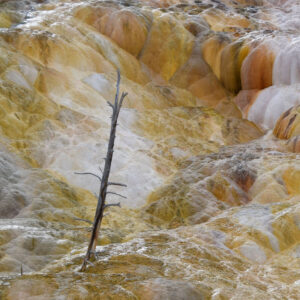
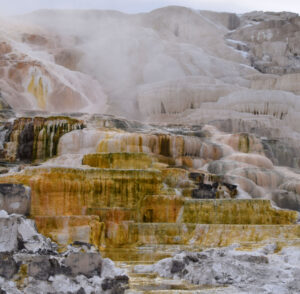
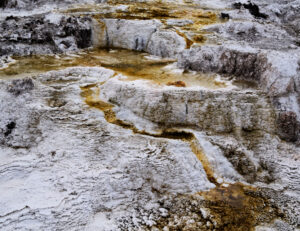
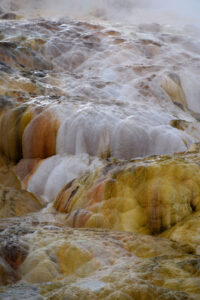
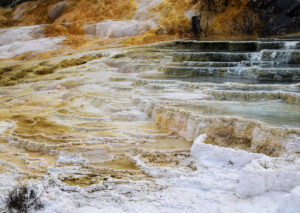
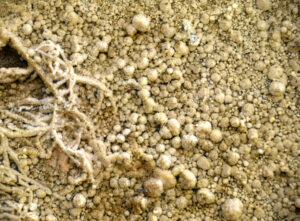
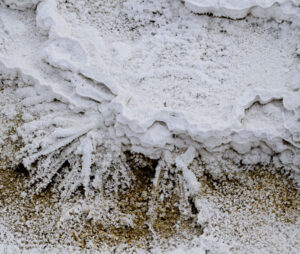
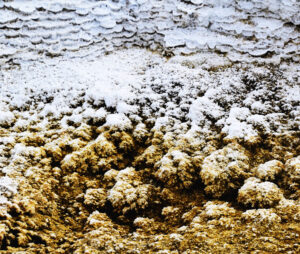
Mammoth Lower Terraces –
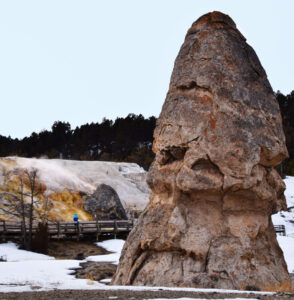
Below is a photo gallery of Mammoth Lower Terraces thermal features (cursor over the photos for associated text):
Soda Butte Cone
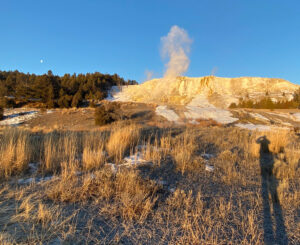
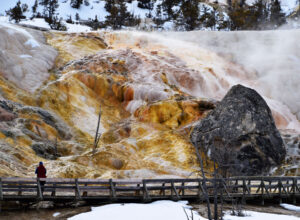
Soda Butte is a largely dormant thermal spring mound, located about 2.5 miles above the confluence of Soda Butte Creek with the Lamar River and approximately 12 miles from the Park’s northeastern gate. A. Bart Henderson, in 1866, misidentified the cone as composed of soda ash, rather than travertine (calcium carbonate), but the name has stuck. Some hydrothermal water and hydrogen sulfide gas still emanate from the cone. In fact – some days a strong sulfur smell lingers around the cone area.
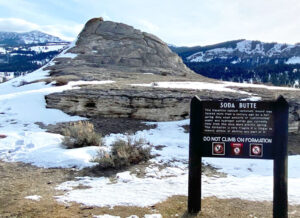
is located in YNP’s northern tier, about 5 miles west
of the northeastern gate.
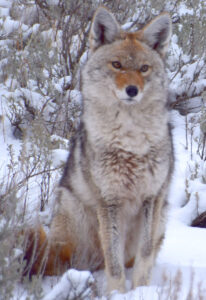
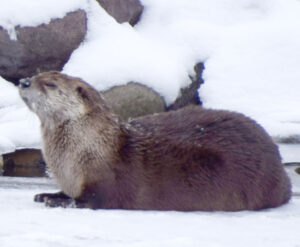
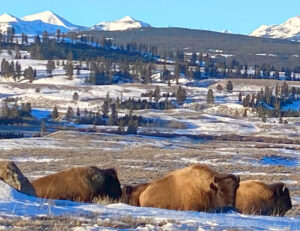
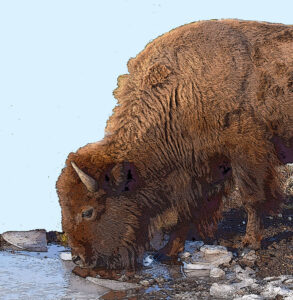
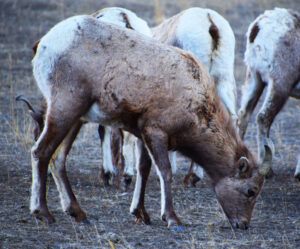
Winter YNP Area Animals (cursor over the photos for associated text)
Reference Cited:
Fouke, B. W., & Murphy, T. (2016). The Art of Yellowstone Science: Mammoth Hot Springs as a Window on the Universe. Livingston, MT: Crystal Creek Press.